
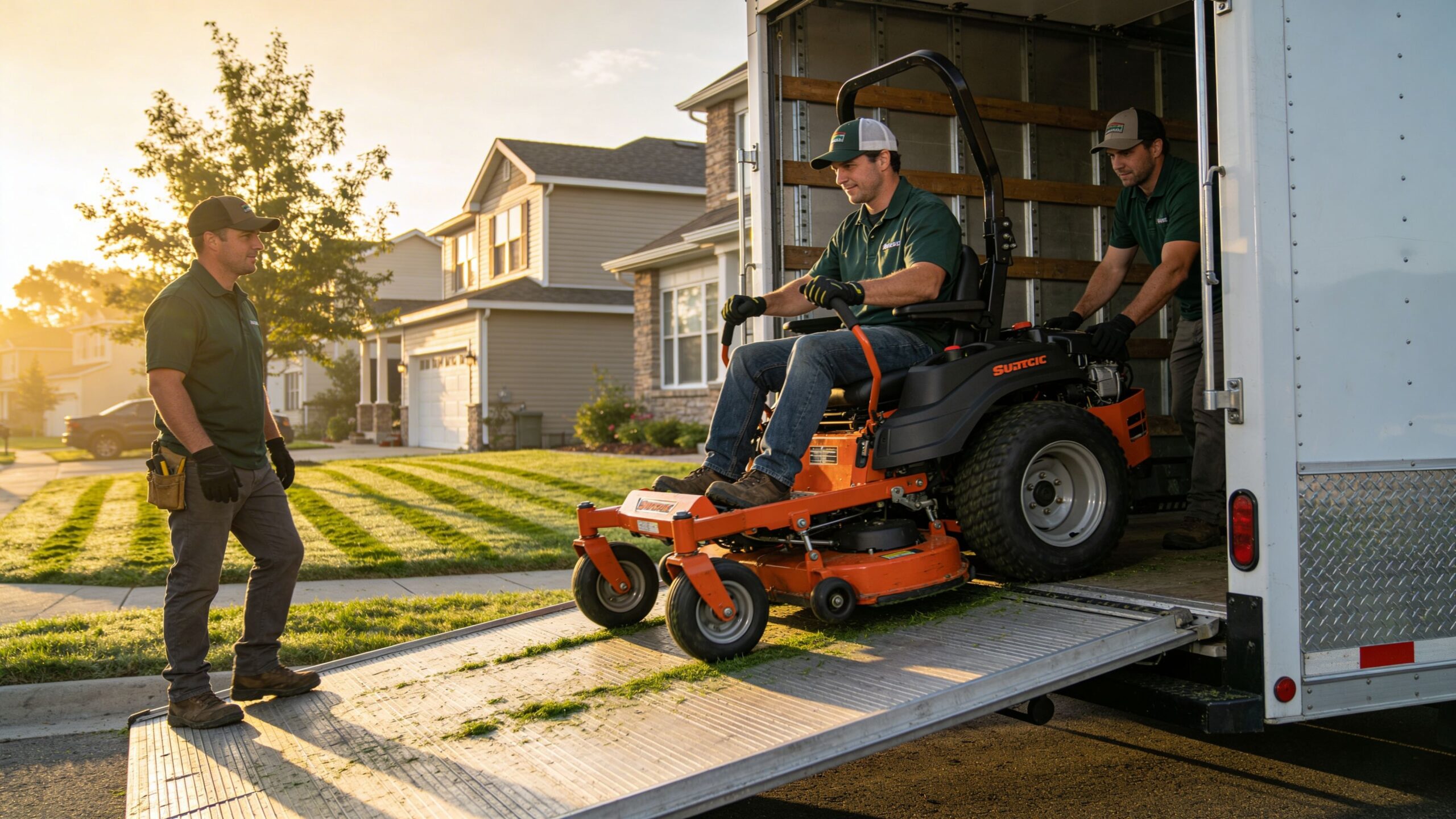
Landscaping and lawn care businesses depend on reliable equipment, and few tools are as essential as a well-built utility trailer. The right trailer doesn’t just move equipment—it shapes efficiency, protects expensive gear, and directly impacts how quickly crews can complete jobs. Choosing the best utility trailer requires understanding durability, capacity, layout, and long-term performance. In the landscaping world, time is money, and organization is everything. A high-quality utility trailer acts as a mobile base of operations, carrying mowers, trimmers, blowers, and materials from job to job. The difference between a basic trailer and a purpose-built landscaping trailer often shows up in productivity gains, reduced wear on equipment, and fewer breakdowns on the road. For professionals, the trailer becomes more than a tool—it becomes part of the system that drives daily operations.
A: A 6x12 is a very common starting point, while larger crews often move up to a 7x14.
A: It can be for lighter setups, but tandem axles are often better for multiple mowers and heavier commercial use.
A: Open trailers are more common because they are easier for fast loading, unloading, and daily tool access.
A: It depends on weight and local rules, but heavier commercial setups often benefit from having them.
A: Landscape trailers usually have higher sides, ramp gates, and features designed for mowers, tools, and debris.
A: Yes, they improve organization, speed up work, and help protect expensive handheld equipment.
A: Buying too small is a common mistake because businesses often outgrow cramped trailers quickly.
A: Steel is common for durability and value, while aluminum helps reduce weight and resist corrosion.
A: Use coupler locks, wheel locks, strong chains, secure parking, and locked storage for valuable gear.
A: Check lights, tires, hitch connection, gate security, straps, and the placement of all tools and equipment.
Built for the Grind: What Defines a Top-Tier Landscaping Trailer
The best utility trailers for landscaping businesses share a few defining characteristics. They are built to endure constant loading and unloading, exposure to the elements, and the weight of heavy equipment. A strong steel frame is typically the backbone of these trailers, offering the durability needed for long-term use. Many are paired with pressure-treated wood decks, which provide both traction and resistance to moisture.
Ramp gates are another essential feature. A well-designed ramp allows for smooth transitions when loading zero-turn mowers and other heavy equipment. Mesh ramps are especially popular because they reduce overall weight while still offering strong support. In addition, reinforced hinges and supports ensure that the ramp can withstand daily use without bending or weakening.
Attention to detail often separates average trailers from great ones. Features like integrated tie-down points, side rails, and tool storage options can significantly improve efficiency. When everything has its place, crews spend less time organizing and more time working.
Size and Capacity: Matching Your Trailer to Your Workload
Choosing the right trailer size is one of the most important decisions for any landscaping business. Too small, and you’ll constantly struggle to fit all your equipment. Too large, and you may sacrifice maneuverability and fuel efficiency. Finding the right balance depends on the scale and type of work you perform.
For many businesses, a mid-sized trailer offers the ideal solution. These trailers provide enough space for multiple mowers and tools without becoming difficult to tow. They are versatile enough to handle both residential and light commercial jobs, making them a popular choice for growing companies.
Larger trailers, especially those with dual axles, are better suited for heavier workloads. They offer increased stability and higher weight capacity, making them ideal for transporting multiple large machines or bulk materials like soil and mulch. However, they also require more powerful towing vehicles and greater attention when maneuvering in tight spaces.
Single Axle vs Tandem Axle: Stability on the Road
One of the key decisions when selecting a utility trailer is choosing between a single axle and a tandem axle design. Each option has its advantages, and the right choice depends on your specific needs.
Single axle trailers are generally lighter and easier to maneuver. They are well-suited for smaller operations and residential work, where tight turns and narrow driveways are common. Their simplicity also makes them more affordable and easier to maintain.
Tandem axle trailers, on the other hand, provide greater stability and weight distribution. With two axles supporting the load, these trailers handle heavier equipment with ease and offer a smoother ride on longer trips. They are particularly valuable for businesses that frequently travel between job sites or carry substantial loads. While they require a larger towing vehicle and may be more challenging to maneuver, their benefits in stability and capacity often outweigh these considerations for growing operations.
Steel vs Aluminum: Choosing the Right Material for Longevity
Material choice plays a major role in the performance and lifespan of a utility trailer. Steel trailers are the most common option, known for their strength and durability. They can handle heavy loads and withstand the rigors of daily use, making them a reliable choice for many landscaping businesses.
However, steel trailers require regular maintenance to prevent rust and corrosion, especially in environments with high moisture or road salt exposure. Protective coatings and routine inspections can help extend their lifespan, but they do require ongoing attention.
Aluminum trailers offer an alternative with distinct advantages. They are lighter, which can improve fuel efficiency and make towing easier. More importantly, aluminum is highly resistant to corrosion, reducing the need for maintenance over time. While aluminum trailers typically come with a higher upfront cost, their long-term durability and lower maintenance requirements can make them a worthwhile investment for businesses looking to minimize downtime.
Designed for Efficiency: Features That Improve Daily Workflow
A well-designed trailer can significantly enhance the efficiency of a landscaping operation. Features that support organization and accessibility are particularly valuable. For example, trailers with built-in racks for trimmers, blowers, and other tools allow crews to keep equipment secure and within easy reach.
Tie-down points are another critical feature. Properly securing equipment not only protects it during transport but also ensures safety on the road. Trailers with multiple anchor points provide flexibility in how loads are arranged, accommodating different types of equipment and materials.
Some trailers also include removable or fold-down sides, adding versatility for hauling bulk materials. This flexibility allows businesses to handle a wider range of jobs without needing multiple trailers. Over time, these features contribute to smoother operations and reduced downtime, making them a valuable consideration when selecting a trailer.
Matching the Trailer to Your Business Model
Every landscaping business operates differently, and the best trailer is one that aligns with your specific workflow. A solo operator focusing on residential lawn care may prioritize a compact, easy-to-maneuver trailer that can navigate tight neighborhoods. In contrast, a larger company with multiple crews may require heavier-duty trailers that can handle larger loads and longer distances.
Geographic factors also influence trailer selection. Businesses in urban areas may need smaller trailers for easier parking and navigation, while those in rural or suburban regions may benefit from larger models with greater capacity. Climate is another consideration, as exposure to rain, snow, and extreme temperatures can impact material choice and maintenance needs.
Understanding how your business operates on a daily basis is key to making the right decision. The best trailer is not necessarily the biggest or most expensive—it’s the one that fits seamlessly into your workflow and supports your long-term goals.
Investing in Reliability: The Long-Term Value of the Right Trailer
A utility trailer is more than just a piece of equipment—it’s an investment in the future of your business. The right trailer can improve efficiency, reduce wear on your tools, and enhance the overall professionalism of your operation. It becomes a dependable partner in your daily work, supporting every job you take on.
Over time, the benefits of a well-chosen trailer become increasingly clear. Crews work more efficiently, equipment remains better protected, and the business gains a reputation for reliability. These advantages can lead to increased customer satisfaction and new opportunities for growth.
Choosing a trailer with durability and versatility in mind ensures that it will continue to meet your needs as your business evolves. It’s a decision that pays dividends not just in performance, but in the overall success of your operation.
Driving Growth with the Right Equipment
The best utility trailers for landscaping and lawn care businesses are those that combine strength, practicality, and adaptability. They are designed to handle the demands of daily work while providing the flexibility needed to take on new challenges. As your business grows, your trailer should grow with it, supporting larger jobs and more complex operations. By focusing on quality, functionality, and long-term value, you can select a trailer that becomes an essential part of your success. With the right equipment in place, every job becomes more efficient, every crew becomes more productive, and every mile on the road moves your business forward.


