Towing a utility trailer is one of those skills that looks simple from a distance but reveals its complexity the moment you hitch up and pull onto the road. Whether you’re hauling landscaping equipment, moving furniture, or transporting tools for work, understanding how your trailer connects to your vehicle—and how weight is distributed—can make the difference between a smooth ride and a dangerous situation. Utility trailer towing is not just about horsepower or pulling capacity; it’s about balance, connection, and control.
A: It is the downward force the trailer puts on the hitch, and it strongly affects towing stability.
A: For most utility trailers, about 10–15% of loaded trailer weight is a common target.
A: The trailer is more likely to sway, especially at speed or in crosswinds.
A: It can overload the hitch and rear suspension, lighten steering up front, and hurt braking balance.
A: Yes, the coupler must match the exact hitch ball size for a safe connection.
A: When hitched up on level ground, the trailer frame should sit close to horizontal from front to back.
A: It is often helpful for heavier bumper-pull trailers, especially when rear sag or poor control becomes an issue.
A: No, the ball mount must have the right rating and the correct rise or drop for your setup.
A: Crossing them creates a cradle that can help support the tongue if the coupler disconnects.
A: A poor hookup is one of the biggest mistakes, especially mismatched ball size, weak latch engagement, or bad tongue weight balance.
The Backbone of Towing: Understanding Hitch Types and Classes
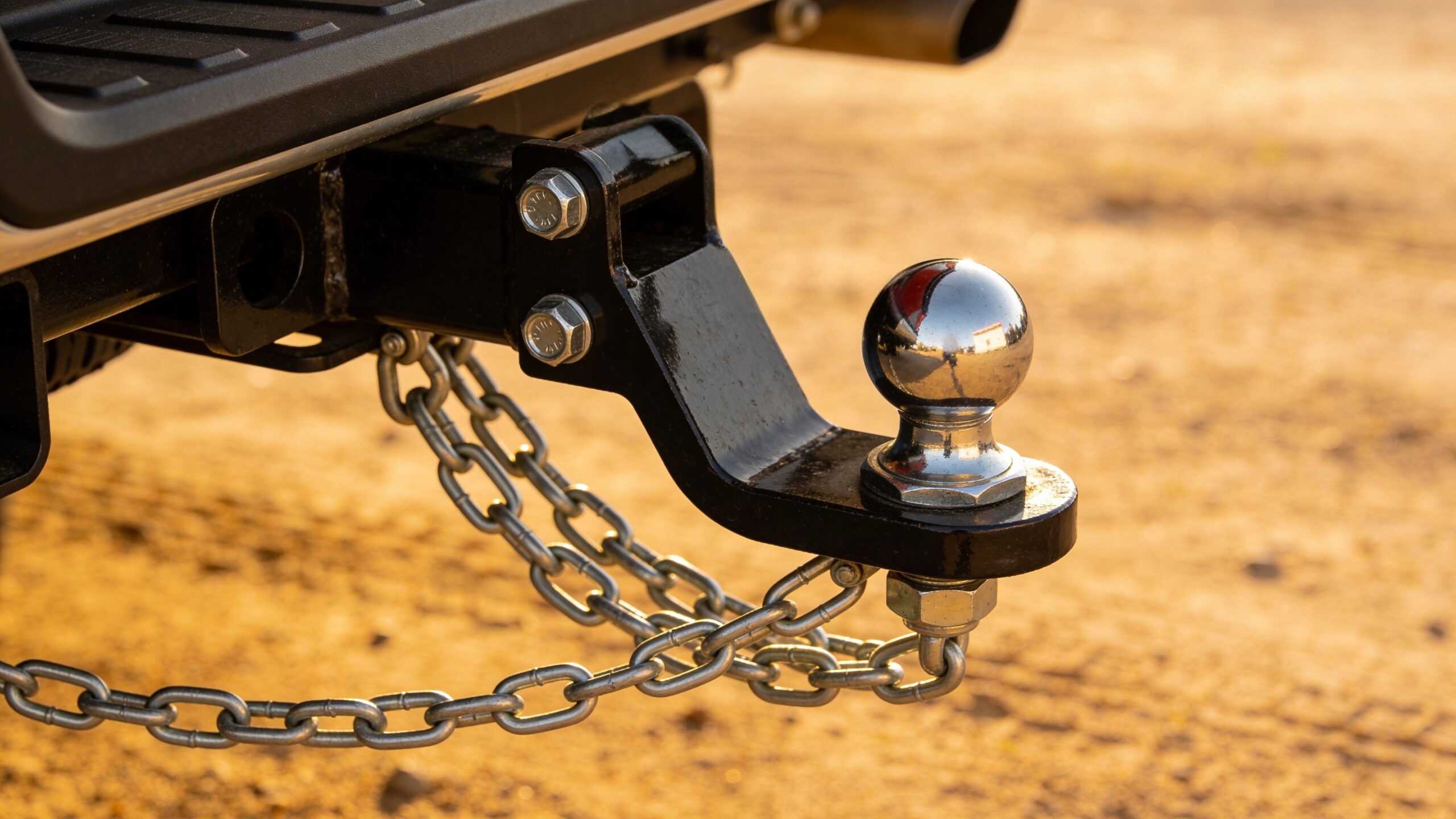
The hitch is the foundation of your towing setup, acting as the connection point between your vehicle and the trailer. Not all hitches are created equal, and selecting the right one depends on both your vehicle’s capacity and the weight of the trailer you intend to tow. Hitch classes are standardized to help drivers match equipment correctly, ranging from light-duty options designed for small trailers to heavy-duty systems built for substantial loads.
A Class I hitch is typically used for lightweight loads such as small utility trailers or bike racks, while Class II offers slightly more capacity for moderate hauling. Class III and IV hitches are the most common for utility trailers, providing the strength needed for heavier loads and offering compatibility with a wide range of accessories. For larger or commercial applications, Class V hitches deliver maximum strength and are designed for serious towing demands.
Beyond class ratings, hitch design also matters. Receiver hitches are the most common, allowing interchangeable ball mounts for flexibility. Fixed-drawbar hitches, on the other hand, offer simplicity but less adaptability. The key is ensuring that your hitch’s maximum rating meets or exceeds both your trailer’s gross weight and the tongue weight it will exert. This alignment creates the structural integrity needed for safe towing.
The Critical Connection: How Couplers Lock Everything Together
If the hitch is the backbone of your towing system, the coupler is the handshake that seals the connection. Mounted on the trailer tongue, the coupler fits over the hitch ball and locks into place, creating a secure mechanical bond. While this connection may seem straightforward, it is one of the most critical safety points in the entire towing process.
Couplers are designed to match specific ball sizes, typically 1-7/8 inches, 2 inches, or 2-5/16 inches. Using the wrong size can result in a loose connection or even a complete disconnect while driving. Proper alignment is essential, and the locking mechanism must be fully engaged before towing. Many experienced operators perform a simple lift test after securing the coupler, raising the trailer jack slightly to confirm that the connection holds firm.
In addition to the primary lock, safety chains serve as a backup system. These chains should be crossed under the trailer tongue and attached securely to the towing vehicle. In the unlikely event of a coupler failure, the chains help keep the trailer connected and prevent it from separating completely. This layered approach to safety ensures that even if one component fails, the system as a whole remains intact.
Finding the Balance: The Science of Tongue Weight
Tongue weight is one of the most important—and most misunderstood—concepts in trailer towing. It refers to the downward force that the trailer tongue exerts on the hitch ball. Getting this number right is essential for stability, steering control, and braking performance.
As a general rule, tongue weight should fall between 10 and 15 percent of the total trailer weight. Too little tongue weight can cause the trailer to sway, creating a dangerous oscillation that becomes harder to control at higher speeds. Too much tongue weight, on the other hand, can overload the rear suspension of the towing vehicle, reducing steering effectiveness and increasing braking distance.
Achieving proper tongue weight requires thoughtful loading. Heavier items should be placed slightly forward of the trailer’s axle, creating the right amount of downward pressure on the hitch. Even small adjustments in cargo placement can significantly impact towing behavior. Experienced haulers often check tongue weight using specialized scales or built-in measurement systems to ensure accuracy before hitting the road.
Stability in Motion: How Weight Distribution Affects Handling
When a trailer is properly balanced, it becomes an extension of the towing vehicle, tracking smoothly and responding predictably to steering inputs. When balance is off, the entire system becomes unstable. Weight distribution plays a central role in how your vehicle and trailer interact, especially at highway speeds or in challenging conditions like crosswinds and uneven terrain.
A well-balanced trailer reduces strain on the hitch and suspension while improving traction and control. Weight distribution hitches can further enhance stability by redistributing some of the tongue weight across the towing vehicle’s front axle. This helps maintain proper steering geometry and prevents the front end from becoming too light.
Handling is also influenced by speed and road conditions. Even with perfect weight distribution, sudden maneuvers or excessive speed can introduce sway. Drivers should remain aware of their surroundings, maintain safe following distances, and avoid abrupt inputs. Smooth, deliberate driving is the key to keeping both vehicle and trailer under control.
The Hidden Details: Matching Components for Maximum Safety
One of the most common mistakes in towing is mismatching components. A high-capacity hitch paired with a low-rated ball mount or an improperly sized coupler can create weak points in the system. Every component—from the hitch receiver to the ball, coupler, and safety chains—must be rated to handle the load.
Hitch balls themselves are often overlooked, yet they play a crucial role. Each ball has a specific weight rating and size, and using one that does not match your trailer’s requirements can compromise the connection. The same principle applies to pins, clips, and locking mechanisms. These small components may seem insignificant, but they are essential for keeping everything securely in place.
Electrical connections are another critical detail. Trailer lights, including brake lights and turn signals, must function properly to communicate your intentions to other drivers. A reliable wiring connection ensures that your trailer remains visible and predictable on the road. Taking the time to inspect each component before towing can prevent issues that might otherwise go unnoticed until it’s too late.
Real-World Towing: Practical Tips for Safer Hauling
While understanding the technical aspects of towing is essential, real-world experience brings these concepts to life. Every load is different, and conditions can change quickly. Developing good habits and staying attentive can make a significant difference in your overall towing experience.
Drivers should begin each trip with a thorough walkaround inspection, checking the hitch connection, coupler lock, safety chains, and lighting system. Tire pressure and condition should also be verified, as underinflated or worn tires can affect stability and increase the risk of failure. Once on the road, maintaining moderate speeds and allowing extra time for braking and turning are key practices.
Backing up with a trailer is another skill that improves with practice. Small steering inputs and patience are essential, as trailers respond differently than standard vehicles. Practicing in an open area can help build confidence and improve control. Over time, these habits become second nature, making towing a more intuitive and manageable task.
Mastering the Connection: Turning Knowledge Into Confidence
Utility trailer towing is ultimately about mastering the connection between your vehicle, your trailer, and the load you carry. By understanding how hitches, couplers, and tongue weight work together, you gain the ability to create a stable, reliable towing setup tailored to your needs. This knowledge transforms towing from a source of uncertainty into a skill you can rely on.
Confidence comes from preparation and attention to detail. Each time you hitch up, you have the opportunity to reinforce good practices and refine your approach. Over time, these small actions add up, creating a safer and more efficient towing experience. Whether you’re hauling for work or personal projects, mastering these fundamentals ensures that every journey begins and ends with control, stability, and peace of mind.
The Road Ahead: Elevating Your Towing Game
As you continue to tow and gain experience, your understanding of these principles will deepen. You’ll learn to anticipate how different loads behave, recognize the signs of imbalance, and adjust your setup accordingly. This progression is what turns a beginner into a skilled operator. Towing is not just a mechanical task—it’s a dynamic process that requires awareness, adaptability, and respect for the forces at play. By investing time in learning the fundamentals and applying them consistently, you set yourself up for long-term success. The road ahead is full of opportunities, and with the right knowledge, you can navigate it with confidence, precision, and control.