Utility trailers are the backbone of countless industries and everyday hauling needs, from landscaping crews and construction teams to weekend movers and small business owners. Yet behind their rugged simplicity lies a complex web of regulations designed to ensure safety on America’s highways. Understanding DOT regulations is not just about avoiding fines—it’s about protecting lives, safeguarding cargo, and operating responsibly in a shared transportation system. Whether you’re hauling equipment across state lines or towing locally, knowing the legal requirements that apply to your trailer can make the difference between a smooth trip and a costly mistake. This guide breaks down the essentials in a clear, engaging way so you can stay compliant, confident, and road-ready.
A: No, but many states require them once the trailer passes a certain weight rating or loaded weight threshold.
A: Yes, trailers generally need functioning tail lights, brake lights, turn signals, and reflectors to be road legal.
A: In most situations, yes. Safety chains are a basic legal and safety requirement for trailer towing.
A: Usually a VIN or serial plate, registration, plate, and title or ownership paperwork where required by state law.
A: Commercial operators face more federal oversight, but personal trailer owners still must follow state equipment and road-safety laws.
A: GVWR is one of the most important because it affects legal requirements, loading limits, and towing compatibility.
A: It is unsafe and may be illegal, so lighting problems should be fixed before towing on public roads.
A: Use properly rated tie-downs, distribute weight evenly, and make sure nothing can shift, bounce, or fall during transit.
A: Some states require inspections while others do not, so the answer depends on where the trailer is registered and used.
A: Keep the trailer registered, maintain lights and brakes, inspect it before trips, and follow your state’s towing and weight rules.
The Authority Behind the Rules: Who Regulates Utility Trailers
When people refer to “DOT regulations,” they are typically talking about rules enforced by the Federal Motor Carrier Safety Administration, a division of the U.S. Department of Transportation. The FMCSA sets nationwide safety standards for commercial motor vehicles, including trucks and trailers used in interstate commerce. These regulations are found primarily in the Federal Motor Carrier Safety Regulations (FMCSRs), which outline requirements for vehicle operation, maintenance, driver qualifications, and safety equipment.
It’s important to understand that not every utility trailer falls under the same level of federal oversight. The distinction largely depends on how the trailer is used. If it is used for business purposes and meets certain weight thresholds, it is likely subject to federal DOT rules. However, trailers used purely for personal purposes may instead fall under state-specific regulations. This dual-layer system means operators must be aware of both federal and state laws, especially when crossing state lines.
Weight Matters: GVWR, GCWR, and When Regulations Apply
One of the most critical factors in determining DOT compliance is weight. The Gross Vehicle Weight Rating (GVWR) refers to the maximum allowable weight of a vehicle or trailer, including cargo. The Gross Combined Weight Rating (GCWR) represents the total weight of the towing vehicle and trailer combined.
DOT regulations typically apply when a vehicle or combination has a GCWR of 10,001 pounds or more and is used in interstate commerce. Once this threshold is crossed, the operator must comply with a wide range of federal requirements, including vehicle inspections, driver qualifications, and safety standards. If the combined weight exceeds 26,001 pounds, additional rules such as requiring a commercial driver’s license (CDL) may come into play.
For utility trailer owners, this means even a relatively small trailer can fall under DOT oversight if paired with a sufficiently heavy towing vehicle. Understanding these thresholds is essential, as many operators unintentionally cross into regulated territory without realizing it.
Lighting the Way: Mandatory Trailer Lighting and Visibility Standards
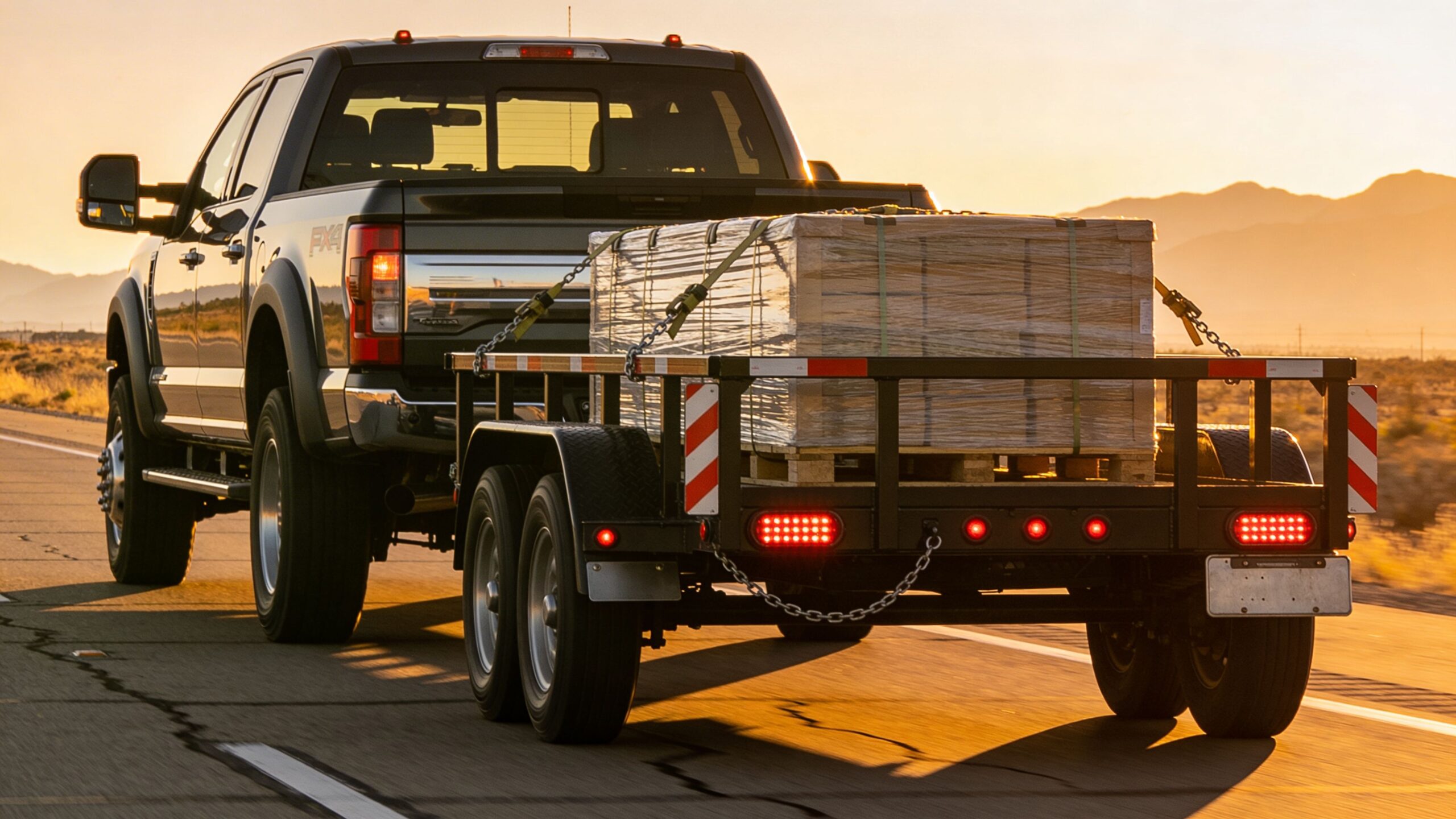
Proper lighting is one of the most visible and strictly enforced aspects of DOT compliance. Utility trailers must be equipped with functioning brake lights, turn signals, and tail lights that are clearly visible from a distance. Reflectors are also required to enhance visibility, especially at night or in low-light conditions.
For trailers wider than 80 inches, additional lighting requirements come into play. These include clearance lights on the front and rear, as well as side marker lights. The goal is simple: ensure that other drivers can clearly see the trailer’s size, position, and movements at all times.
Beyond installation, maintenance is equally important. A single burned-out bulb can result in a citation or even being pulled out of service during an inspection. Regularly checking your trailer’s lighting system before hitting the road is one of the easiest ways to stay compliant and safe.
Securing the Load: Cargo Tie-Down and Safety Requirements
Cargo securement is a major focus of DOT regulations, and for good reason. Improperly secured loads can shift, fall, or create dangerous road hazards. The FMCSA has detailed rules outlining how cargo must be restrained based on its weight, size, and type.
In general, cargo must be secured with tie-downs that are strong enough to withstand forces encountered during normal driving conditions, including sudden stops and sharp turns. The number of tie-downs required depends on the length and weight of the load, but the principle remains consistent: the load must not move.
Additionally, certain types of cargo, such as machinery or loose materials, have specific securement requirements. For example, equipment with wheels must be immobilized, and loose debris must be covered or contained. These rules are not just technicalities—they are critical safeguards that prevent accidents and protect everyone on the road.
Brakes, Breakaways, and Control Systems
Braking systems are another essential component of trailer safety. Most states require trailers over a certain weight—often around 3,000 pounds—to be equipped with their own braking system. This ensures that the trailer can stop effectively without overloading the towing vehicle’s brakes.
In addition to standard brakes, many trailers must have a breakaway system. This system automatically applies the trailer’s brakes if it becomes disconnected from the towing vehicle. It’s a crucial fail-safe that prevents runaway trailers, which can cause catastrophic accidents.
Controllers inside the towing vehicle allow drivers to manage trailer braking force, ensuring smooth and controlled stops. Proper installation and calibration of these systems are vital, as poorly adjusted brakes can lead to instability or reduced stopping power.
Registration, Markings, and Identification Requirements
Utility trailers used in commercial operations often require specific markings and registration. If a vehicle or combination falls under DOT regulations, it may need a USDOT number, which must be displayed on the towing vehicle. This number allows authorities to track safety records, inspections, and compliance history.
State registration is also mandatory for most trailers, regardless of whether they are used commercially or personally. This typically includes a license plate and proof of ownership. Some states also require periodic inspections to ensure the trailer meets safety standards.
For commercial operators, additional requirements such as company name markings and safety decals may apply. These identifiers help enforcement agencies quickly determine compliance during roadside inspections and audits.
Inspections and Maintenance: Staying Roadworthy
Regular inspections and maintenance are at the heart of DOT compliance. The FMCSA requires commercial operators to perform pre-trip and post-trip inspections, checking key components such as tires, brakes, lights, and coupling devices. Any defects must be addressed before the vehicle is operated.
Annual inspections are also required for commercial vehicles and trailers. These inspections must be conducted by qualified individuals and documented properly. Keeping accurate records is essential, as they may be reviewed during audits or inspections.
Maintenance is not just about compliance—it’s about reliability. A well-maintained trailer reduces the risk of breakdowns, improves safety, and extends the life of your equipment. Investing time in routine checks can save significant costs and headaches down the road.
Navigating State vs Federal Rules: What Every Operator Should Know
One of the most challenging aspects of trailer regulations is the interplay between federal and state laws. While the FMCSA sets nationwide standards for interstate commerce, each state has its own rules for trailers operating within its borders.
For example, states may have different requirements for trailer brakes, lighting, and registration. Some states also impose additional safety standards or inspection requirements. This means that even if you are compliant in one state, you may need to adjust your setup when traveling to another.
For operators who frequently cross state lines, staying informed about these variations is essential. Many states provide detailed guidelines on their transportation department websites, and consulting these resources can help avoid unexpected violations.
The Bigger Picture: Safety, Responsibility, and Long-Term Compliance
At its core, DOT regulation is about more than rules—it’s about responsibility. Every trailer on the road represents a potential risk if not properly maintained, loaded, and operated. Compliance ensures that drivers, passengers, and cargo all arrive safely at their destinations.
For business owners, adherence to DOT regulations also builds credibility and trust. Clients and partners are more likely to work with operators who prioritize safety and professionalism. In an industry where reputation matters, compliance is a powerful asset.
As regulations evolve and enforcement becomes more sophisticated, staying informed is more important than ever. Taking the time to understand and implement DOT requirements not only protects you from penalties but also contributes to a safer and more efficient transportation system for everyone.
Driving Forward with Confidence
Mastering DOT regulations for utility trailers may seem overwhelming at first, but it ultimately comes down to understanding a few key principles: know your weight classifications, maintain your equipment, secure your cargo, and stay informed about applicable laws. By approaching compliance as an ongoing process rather than a one-time task, you position yourself for long-term success on the road. Every mile traveled with a properly equipped and compliant trailer is a step toward safer highways and more reliable operations, making the effort well worth it.